
Mari’s Blog

A Restful New Year

Shadows on snow are so . . . restful
C:12.5 You are looking for the rest and quiet joy that only comes from love.
Yes, it’s a new year, but can it wait a week or two? I am new to rest; barely beyond the stage of needing excuses. Do you know what I mean? “I’m so tired I need to rest . . . but why? What have I done that was so draining?” Or how about: “Jack, June, Judy, Jeff, Jill, Joy, JoEllen, Jan and Jackie, all did more than me, and they’re not tired! Why am I?”
Yes, I have moved a bit beyond needing excuses; a tad beyond comparisons. But I sure haven’t forgotten the many years I spent with them and I have felt them nipping at my heels the past few weeks. If there’s a time of year when old patterns are going to return, this is it. There is, for one thing, lots of family engagement for many of us, and in our own families, some of us now meet the diversity of the world: various races, ethnicities, religions, battles over territory, and food competitions, not to mention the combining of generations; people born as many as 90 years apart and everything in between!
All that aside, there’s another kind of rest that I’ve felt moving in. Rest from thinking. Now this kind of rest is really interesting and even harder to understand than the need for physical rest. It defies explanation. I once felt it was confined to things like tax season dread during which I’d internally wail, “My mind doesn’t work that way anymore.” That was simply true! Another truth (or at least easily digestible fact) has been my, “I can’t wrap my head around that,” alarm over new technology. I could go on: the aversion to planning! The “Oh please, don’t ask me to think that far in advance,” or to consider the details or the strategy! All of this is nothing new to me.
But there is something new going on. Whatever it is . . . I like it.
The movement from mind to heart energy can cause a lot of angst before it begins to dissipate. Letting go of thinking is almost the first instruction of A Course of Love, and is probably the last to be accepted . . . the last letting go. But the benefits are, (as spoken by a novice), incredible: a new kind of more restful energy that is trusting and creative and adventurous.
That it’s coming to me after seventeen years with this Course may not be a great feat, but my slowness doesn’t mean anything. Nor does this new “restfulness” feel like the result of anything I’ve done. And yet, the cornerstones of A Course of Love are entirely capable of leading even the most diehard thinkers to “new thought,” new feeling, and new ways of doing. I’d put those cornerstones something like this:
- Know yourself
- Accept yourself
- Allow yourself
- Love yourself
Rest.
C:9.22 My words call you to the eternal, to nourishment and rest of the spirit rather than the body.

Gifts that are borne to us
 “We are about finding our heart and soul so that we can live them into existence in this world.”
Slowly, slowly, I’m building up to a full contingent of Course of Love chapters done in audio. Re-doing some of the early ones, I noticed that in Chapter 4 we hear that love joins the world, (C:4.25) and in Chapter 7, that it is not the world that keeps us separate, but rather, we who keep ourselves separate from the world. (C:7.9) The ongoing message is that love joins (or does not join) the world . . . through us.
This has been emphasized in my life in these days following Christmas, days when everyone is exhausted. I have found many times that in the “let down” of exhaustion, love . . . happens: confidences are shared, quiet is enjoyed, the belovedness of the ordinary returns.
I live, in so many ways, an ordinary life. There have been times over the years that this has felt “all wrong,” times when my experiences made me judge my life and determine that it needed to be quite different than it was. But as the years have gone by, I am convinced that living the extraordinary within our ordinary lives is a perfect way of being for many of us. And I feel that part of my charge, is sharing in a way that helps more people to see that they also do this, often without recognizing it or its value.
I mention it, because in that “end of the year” way, I’ve been thinking about what I have to  share. What my life—in its context—with all its ordinariness and extraordinariness has to say. With A Course of Love Combined Volume finding new readers and increased interest, you can maybe imagine that this has been a subject lying in wait in the background of my life, in those subconscious reaches that call us to explore them when the time is right.
If there is one thing I am passionate about, it is moving away from teaching and learning, but not only as a method. I am passionate about the return of wholeness to our lives. Throughout time we have heard not only of the “teachings” of Jesus, but are asked to consider: what is the message of Jesus’ life? We hear of the star under which he was born, the prophets who announced his coming. At Christmas we hear of his lineage in a series of fourteen generations. We are given historical context. And then we begin to hear of events. After Jesus is Baptized and identified as “who he is;” after he accepts “who he is,” he begins to live the life that “who he is” has anticipated. I believe that what Jesus calls us to is like this. In our own lives, we too can find the pointers that identify “who we are” and what is ours to do. I do not know how to describe this finding in my own life. It is indescribable perhaps. Yet it is a movement of the heart that leads, as is said in The Dialogues, to conviction.
As so often happens when I’m moved to strong feelings, I find something that is so relateable and so much more beautifully said than I can say it, that I have to share. James Hillman speaks of what happens in the movement away from mind and ego, and says that as consciousness becomes “broader and more feminine in its receptivity and self-intimacy, the flesh as well transforms into body consciousness.” He calls body consciousness “the actual incarnation of our humanity in warmth and joy and ease and rhythm and being present here and now, physically close to ourselves . . . and to others. Out of the stable of one’s own hunted and exhausted flesh, one’s own rejected physical self, asinine and dumb as an ox, the new body is born and then come the kings bringing gifts.”
Why does this movement, this momentum, this build-up to finding the sacred and significant in our own lives feel peculiar? Because it is divergent from the trajectory of the past. It says our experience here is more valuable than we know. It means that we are about finding our heart and soul so that we can live them into existence in this world. This experience is intangible, yes. It is that way. But it is available here and now . . . and the kings and queens still arrive bearing gifts.
(Hillman quote taken from, Insearch: Psychology and Religion, p. 122)
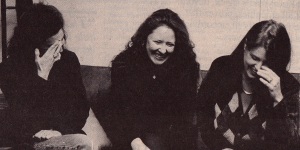
The gift of friendship
One of my favorite things about A Course of Love, is that it invites us into deeper friendships with ourselves, each other, and even with Jesus. In The Dialogues, Jesus says we have done our learning, and our teacher (him) has stepped back. He confides that “We are both friends and co-workers. Colleagues as well as companions.” (D:D6.25)
I experienced the wonder and thrill of beginning my spiritual path through friendship. Take  Heart Publications has now republished (in ebook form) The Grace Trilogy, the tale of that beginning, and I am filled with gratitude once again, for the experience. This photo is my favorite of the publicity photos that appeared when The Grace Trilogy first came out in 1997. It is from an interview that Mary Love, Julieanne Carver, and I gave to the “Minnesota Daily,” the newspaper for the University of Minnesota. We worked there at the time. I love it because it so un-posed and natural. How often in a lifetime do we get such photos? Photos that capture our love and laughter as it happens?
It is not that I ever, for a minute, have not felt gratitude for that beginning, only that I feel it newly now. Even such things as re-publishing can cause you to enter a new relationship again, as I’ve found, as well, with the re-publishing of A Course of Love Combined Volume. My relationship to the words and to the world is different! My experience of publishing is very different, and, in a most lovely way, has grown new friendships for which I am exceptionally grateful as well.
Strangely enough, although also totally appropriate, is the feeling of humility that washes over me with both of these ventures. There is enough to spread all around, and I could, as usual, go on and on. But I want today, to share the strength of the humility I feel when I think of Mary Love.
Mary lost her daughter Grace when she was five weeks old. She wrote to her daughter through the early days of awe over having conceived, through the mid-term of preparing to bring her home, and as she discovered that her baby’s heart was enlarged. She wrote after her daughter died. Two years later she shared this “secret” writing with me. Her writing still moves me so. It is just beautiful—she is just beautiful. But what came to me newly is how wise she is. Mary survived the death of her daughter, Grace, with the greatest of blessings. You might say that the heartaches of life that don’t break you or turn you toward bitterness or resentment, bring you to wisdom and compassion naturally. You have “something” that is very precious and strong; that is real and shareable; but that takes great courage to share. Mary had the courage to accept being made vulnerable, and in her acceptance of it, showed Julie and me the necessity of vulnerability too. That Mary has shared her heart’s wisdom with me all these years, is my own most precious gift of friendship. And my recognition of it is what is making me feel so humble today. Sometimes people think that I possess certain blessings for having received A Course of Love, and I suppose I do. I am grateful that this may be the case, and that I have come to see that by sharing myself, I also share whatever blessings have been made mine. Sharing ourselves is really the only way to share. This I learned with Mary and Julie even before A Course of Love came to me.
We, in friendship, discover and grow…together…with a lack of intention. Without there being a goal to achieve. Friendship doesn’t have to have a reason for being. It doesn’t have a point. Friendship is one of the greatest experiences of being alive and being human, and one of the greatest examples of what is available without effort, and of what effort can ruin. Friendship requires us to be who we are—naturally.
When Jesus calls us together in The Dialogues to be in friendship, to be “colleagues as well as companions,” it is an invitation to join together as who we are in this joyous and supportive way.
So many people I have met have either been on solo journeys, or have been on a path that found them feeling a bit solo in community, often not seeing deep friendship as Holy Relationship but more as “special” relationship. I was reading ACIM in the final year or so that I shared my job with Mary and Julie. I remember one day going to our favorite lunch spot, a burger joint called The Big Ten, and asking them to join with me in Holy Relationship. It’s always cracked me up that we entered Holy Relationship in this way, sitting in a booth with burger baskets.
Friendship is perhaps one of the most glorious gifts of the wholeheartedness Jesus speaks of in A Course of Love. We can’t work for the blessings of the heart, but they come to us in the mutuality of true sharing and the extraordinary found in our ordinary lives. That’s what I love most about the books of the Trilogy…how “not” perfect or “trying to be” we were. How we were simply open and generously given to … by each other and the universe.
You can read a bit about the books on our “Other Books” page, and purchase them through Amazon and Barnes and Noble. The Grace Trilogy is:
 Love: A Story of Connection;
Grace: Finding the Light, and
Peace: Meeting at the Threshold.
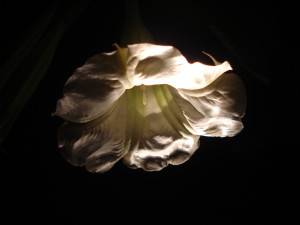
The Gift of Inspiration
 “Igniting your mind by touching your heart.”
Each week I write a post here. Each week, toward the end of the week, I start to hope I’ll be inspired. I am not worried, it just begins to cross my mind. If I had a corresponding thought to be put into words it would be, “I hope something comes to me.” And suddenly, invariably, there it is: inspiration.
This week, I was picking up the kitchen. I don’t know about you, but I tend to leave things on the kitchen table. Paper is the worst. (Actual newspaper, papers that come home from school with my grandson, a half-finished crossword puzzle, a bit of mail.) By the end of the week I’ll have a pile. Some are “things I don’t know what to do with.” This week what fell into that category was the program from the play my grandson and I saw with his class. Yesterday, as I debated whether to discard the program for “The Chanukah Guest” or to put it in Henry’s memory box, I noticed the “back” of the program for the first time. How could I help but be inspired by these words: “Igniting your mind by touching your heart.” Under that it said: (Even if you’re not Jewish). Here is more of the blurb from the Minnesota Jewish Theatre Company:
As modern times dissolve geographic boundaries between cultures, we are enormously enriched by encounters with individuals of backgrounds quite different from our own. But in the swirl of multicultural worlds, we sometimes seem to be losing our grasp on what is unique about our own roots. Jews have centuries of stories to tell that can help us all to find and express our true selves in today’s complex societies. Some are delightfully poignant. Some profoundly tragic. Some explode with heroic courage. Others make you weep. Some give gentle, quiet inspiration. And others simply make you laugh outrageously.
I have long had an interest in oral history; a lesser interest in genealogy, but they go together to a point. I remember how, when I was first drawn to spirituality, I questioned this interest. Did it matter? Did “who we are” pertain any longer to our human roots, our family stories? It didn’t happen right away, but eventually, these questions were answered.
Many people have similar questions. For some, “family of origin” questions take up little space and are readily discarded. For others, their roots feel like a crucial piece of the puzzle of their identity. Others are simply fascinated by stories of the past, stories full of archetypal themes of exodus and arrival, crossing oceans to find new life. A story of immigration begins A Course of Love:
You are an immigrant coming to a New World with all your possessions in hand. C:1.7
This could be read as a story of leaving the past behind. And yet, what I see happen in A Course of Love is like a circular route from ourselves to our Self, a Self capable of holding it all. As we finish the Treatises of A Course of Love, we hear this:
[I]f you have been religious, abandon not your churches, for you will find within them now, direct experiences of sharing. If you have found guidance and comfort in the written word, abandon not the written word, for the written word will now elicit direct experiences of sharing. If you have enjoyed learning through gatherings of students, gather still, and experience sharing directly. If a time arrives when you no longer feel drawn to these modes of sharing, share anew in ever-wider configurations. T4:12.9
What touches us is what touches us. It is unique. Individual. We are freed through A Course of Love, from wondering if it is okay to be interested in what we’re interested, to feel as we feel. We become comfortable with and accepting of what touches our hearts…no matter where that touch arises. There is no call to either stay within our own traditions or to abandon them. There is only the call to follow our hearts, to go where drawn.
No lessons learned without love touch your heart. No lessons that do not touch your heart will accomplish anything. C:24.4
In our own stories, we will each find the poignant, the heroic, the tragic, the hilarious, and also the very power of story. Stories touch our heart. We touch and transform our stories as our hearts open to love. I can’t think of much of anything more inspiring than that!
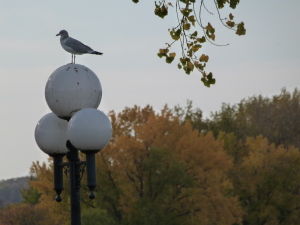
New Beginnings

“You learn to speak by speaking, to study by studying, to run by running, to work by working; and just so you learn to love God and man by loving. Begin as a mere apprentice and the very power of love will lead you on to become a master of the art.”
Francis de Sales
I was reading in my “recovery” book: “Courage to Change” the other day, when I found this quote I wanted to share. From that came the idea of speaking of and to the recovery community, inviting your participation and your wisdom.
I don’t really know how to talk about the experiences that I’ve had in this community. My dealings have been on the end that Melody Beattie so thoroughly described as co-dependency. I just love her. She has a way of writing that I admire a great deal…but how does she do it? How does she share her experiences so personally, so nonjudgmentally, and so helpfully? With such self-knowledge and knowledge of others too? Doing what she does isn’t my charge, so I hope it’s enough to say that the experience of one family member brought me into close contact with the recovery community, and since that time, I have come to have great respect for it. (Not that I didn’t before, just that it wasn’t on my radar.)
Once I began to wonder about bringing this up, I recalled a chapter in The Treatises of A Course of Love called The New Beginning. It is particularly poignant to me to consider it, because it speaks of how hard new beginnings are to come by. I feel as if I know the “hard to come by” feeling from both sides of the spectrum. As a former single-mom, I felt real judged for my mistakes, and as if I’d never recover from them; as if no one would ever see me differently. That’s one side of it: thinking you’ll never be given the chance to make a new beginning. The other side is being willing to accept that a new beginning is actually occurring: in this case, within me as well as my family member, as our healing continues.
Just last night, I had an experience where for about twenty minutes, feelings and insights were flooding me at the speed of light. It was so weird. It was like I was seeing how it happened that I’d gotten so worked up in the past. The things that ran through my mind would take me hours to type. How can that be? How can it be that thoughts, rather like dreams, can flood you in this way? You still hear your thoughts in words that arrive one at a time…don’t you? But if that is so, why would it take hours to type the thoughts that arose in minutes?
Still, it was a rather remarkable, “letting go,” “look at what’s behind you” kind of experience. One of many I’ve had in many different forms, the first of which (in this context) was likely when I felt as if Jesus took my family member from me, and said, “Leave it to me now.” And probably more importantly, I said, “Okay.”
I’m of the type where I want to consider each deeply felt “letting go” to be the last, and yet, I know that in living life as it arises, times of not being able to let go may surprise me once again. That being said, I am on the journey. I am here and seeing new things. I have felt my wounds and am moving on to making my own apologies for wounds I’ve inflicted. But what I’m most interested in is letting go, and allowing new beginnings to come to be.
Being at a certain age, I now can see how many new beginnings I’ve had and how grateful I am for each. They are such a grace. There is such mutuality in them. In them, there is a lack of sugar-coating. A facing of truth. Courage. Trust. Humility. And always love. And gratitude! What a deep wealth of gratitude I’ve found.
In the chapter on New Beginnings, after speaking a good deal, (and very accurately in my view) of how capable we are of sabotaging new beginnings, Jesus says:
T3:15.7 You must now birth the idea that human beings do indeed change. While you have known instinctively that there is a core, a center to each that is unchangeable, you must now give up the idea that this core or center has been represented by the past. You must forget the idea that the future cannot be different than the past.
The power of love comes to us in many ways. I am confident that it flows through A Course of Love and extends to us a great capacity, the greatest capacity possible, for new beginnings and a new future.
